
ABOUT PACIVA
An assistant for every person. Not a replacement for any of them.
AI is changing how work gets done, and most of this industry is aiming it at the people who do the work. We took the other side. Paciva builds Pax, an AI executive assistant for individuals and a chief of staff to organizations. It reads what arrives, acts inside limits you set, records a reason for every decision it makes, and knows enough about your work to be useful by the second week. Underneath it is a governed agentic system with a bench of models, its own memory, and direct connections into the tools you already use. One per person.
Why the company exists.
Communication outgrew the hours available to handle it, and then AI made it worse by making the flood cheap to produce. Every serious answer so far has been a faster treadmill. Better sorting, quicker drafting, tighter summaries. All of it leaves the work with the person.
We started on the opposite premise. A tool that helps you go faster still needs you present at every step. An assistant takes the outcome and hands it back finished. That is not a better feature, it is a different product, and it has to be built differently from the first line of code.
The part most people underestimate is memory. An assistant that forgets you every morning is not an assistant, it is a form. Pax carries the context of your work forward, which is why the third month is better than the first and why nobody here has to explain the same thing twice.
What we built underneath.
The assistant is the part you see. Most of the engineering sits in what decides how it works, and that is where the difference between products in this category actually lives.
A bench of models, not a bet on one.
Twenty-two local models sit in inventory alongside frontier reasoning from the cloud, ranging from fast lightweight work through to the heaviest jobs, with multimodal handling on the device itself. Pax routes each piece of work to the model that suits it and moves between local and cloud without you managing any of it.
Twelve operating modes with measured costs.
Every mode Pax runs carries a known compute requirement. The system understands before it starts which work belongs on your own machine and which genuinely needs the cloud, which is what makes a hybrid design work rather than a marketing diagram.
Quality levels, stated rather than implied.
Local capability is graded so expectations match hardware instead of marketing. Premium consumer machines reach level four of five today. Better hardware lifts the ceiling, and we would rather tell you where your machine sits than let every buyer assume the same experience.
Token economy as architecture, not as a bill.
Work is optimized for token consumption before it runs, which is why the interface stays quick under load. A compression layer extends how much useful work local hardware can take on, including hardware as modest as a phone.
Direct integrations rather than a protocol shortcut.
Connectors are built against each service’s own interface instead of being routed through a generic protocol, with that protocol held in reserve for when an interface breaks. It is considerably more work. It is also why the depth of what Pax can actually do inside a connected service is different.
The orchestration is our problem, not yours.
Keeping a set of models consistent across a long piece of work is the hard part of this field, and it is the part most products hand back to the user as prompting. You describe an outcome. The system handles the process, the routing, the effort level, and the recovery when something goes wrong.
Memory that goes back as far as your work does.
Pax reviews and consolidates what it knows about you rather than accumulating everything forever, and local processing lets that review run across the full history of every connected surface instead of stopping at an arbitrary horizon. Depth of context is the difference between an assistant and an autocomplete.
What we will not build.
A company is easier to read from its refusals than from its roadmap. These four are permanent.
01
A replacement for a person.
Software sold as somebody’s replacement has to be adopted by the person it threatens. That is a strange thing to ask, and it goes a long way toward explaining why so much of this category gets bought and never used. Pax is one per person. It makes the person holding it harder to do without.
02
A model with our name on it.
We do not train frontier models and we will not pretend otherwise. Pax uses reasoning from whoever is best at it this quarter, tested against real work before it touches yours. A house model would be a marketing asset with a ceiling, and you would be the one living under it.
03
A capability we cannot log.
If Pax acts on your behalf and cannot say why in a sentence you would use yourself, it does not ship. Reversible things stay reversible. Accountability without a record is a word in a policy document.
04
A claim we cannot mark as shipped.
Every capability on this site carries a tag reading live, partial, or direction, including the ones we would rather round up. Ours are further down this page. They cost us sales and they are staying.
Built on the questions this industry keeps skipping.
Software that acts for you raises questions the marketing walks past. We would rather answer them in public and be held to the answers.
What happens to the people whose work this absorbs?
Nothing, if the assistant goes to them rather than over them. One per person is not a pricing decision. It is our answer to this question.
Where should your private information be processed?
As close to you as the hardware allows. Local compute exists here for two reasons, protecting what identifies you and running work directly on your machine. Twenty-two local models are already in inventory for it, and only what genuinely needs frontier reasoning leaves the device.
Where should your private information be processed?
As close to you as the hardware allows. Local compute exists here for two reasons, protecting what identifies you and running work directly on your machine. Twenty-two local models are already in inventory for it, and only what genuinely needs frontier reasoning leaves the device.
In engineering, not shipped
How much authority should software have to act for you?
Exactly what you have handed it, and not a step past. Anything that cannot be undone waits for you, wherever the dial sits.
What should an assistant be allowed to remember?
Everything you tell it. Nothing you take back. A request to forget removes the fact, not the view of it.
Who is accountable when it gets something wrong?
We are. The log exists so you can prove it.
Two founders, one product.
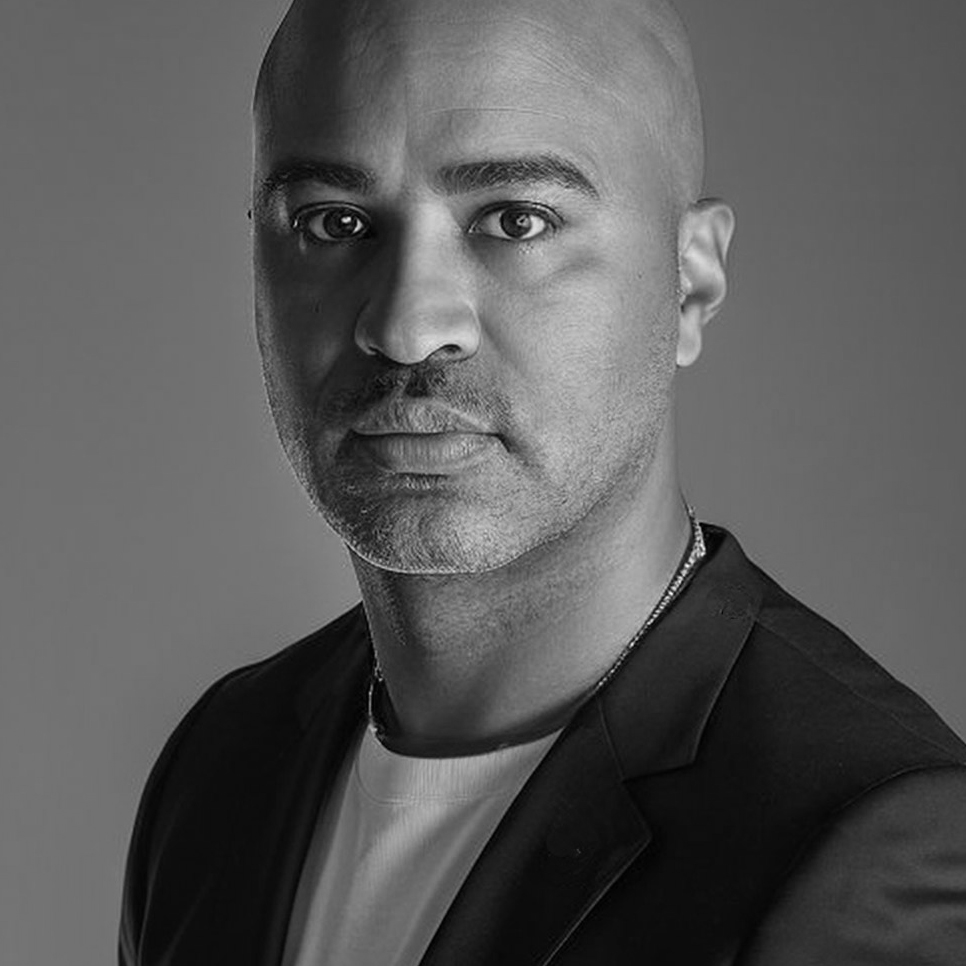
Paciva is built by two people who have each run the other one’s job before, which is why the split works. Nothing sits between a decision and a shipped result.

How we work.
These are the rules the company runs on, not aspirations posted on a wall. They decide what ships and what gets cut.
01
Do the work, do not speed up the work.
Every feature meets the same test. Does this finish something for the person, or does it only make the person faster at finishing it themselves. If it is the second one, we cut it.
02
Say the number or say nothing.
Every figure we publish traces to a source you can check. Graymail costs $12,796 per employee per year, from 1.5 hours a day across 235 working days at the BLS average of $36.30 an hour. When we do not have a number, we say so rather than inventing one that sounds right.
03
Earn authority, do not assume it.
Pax starts conservative and asks. As it proves itself on a kind of work, you hand it more, and you can pull that back in a moment. We would rather be trusted slowly than impressive once and wrong in public.
04
Ship, then talk about it.
The company runs on shipped product, not roadmaps. A page that sells something we have not built costs more than the sale is worth.
05
Build the company the way we build the product.
Pax starts conservative and asks. As it proves itself on a kind of work, you hand it more, and you can pull that back in a moment. We would rather be trusted slowly than impressive once and wrong in public.
06
Calm is the feature.
Less noise, more signal is not a line we picked for the sound of it. It is the outcome the whole product is judged against. If using Pax makes a day louder, we got something wrong.
07
The private parts stay on your side.
An assistant reads everything, which makes where the reading happens an architecture decision rather than a policy one. A promise in a policy document can be revised. A system that never receives the data cannot hand it over.
What governs an assistant that acts for you.
Most companies put a board roster in this slot. At our stage the governance that matters to you is not who sits on a board, it is what constrains the software inside your accounts. So that is what this covers.
You set how far Pax goes with a single control called Pacivity. Turn it down and Pax proposes and waits. Turn it up and Pax handles the work you have already watched it get right. Anything irreversible waits for you regardless of the setting. Every action carries a plain-language reason and a log, and reversible actions carry an undo.
Pax connects through each provider’s own sign-in, holds only the scopes you grant, and stops the moment you withdraw them. Your memory is scoped to your account, it serves you, and it is not sold or repurposed. Tell Pax to forget something and the fact leaves the store, not just the view.
Where the work happens matters as much as who does it.
An assistant that reads everything raises a question no permission screen answers, which is where the reading takes place. We are building so the identifying parts of your communication are handled on hardware you already own, with only the parts that need reasoning leaving the device. The desktop application looks at your machine first and works out what it can do locally before asking anything of our cloud. This is not shipped, and the status list below says so.
Compute you already own and already power.
Organizations own hardware that sits idle most of the day and pay for the electricity either way. Pax is built to pool that capacity across offices and branches so the machines already on the floor carry the work, which lowers what leaves for the cloud and lowers the frontier model bill with it. Run this way, adopting an assistant reduces demand on data centres rather than adding to it. That is a direction the architecture is built toward, not a switch you can flip today.
No single model to be trapped behind.
Pax is not one company’s model in a wrapper. It uses models for reasoning only, we test them against real work before trusting them with yours, and it routes each job to whichever one handles it best across a bench that spans local hardware and the frontier. A lab’s pricing decision, outage, or policy change does not become your problem.
We would rather show the work than describe it.
Everything here is public, sourced, and readable without talking to anyone.
Research [lucide name=“square-arrow-out-up-right” theme=“dark”]
Research
Research
Policy and security
Positioning