The Cold Outreach Arms Race: Why Automation Keeps Getting Worse

Table of Contents
- The Graymail Economy Report 2026
- Table of Contents
- Sending got cheap, so volume became the strategy
- Lower response rates create a spiral, not a correction
- AI removed the last bottleneck: writing
- LinkedIn turned identity into a delivery advantage
- “Personalization” became token swapping, and buyers noticed
- Platforms can limit abuse, but they cannot define “signal” for you
- The real cost is attention, trust, and context switching.
- A practical way out: faster triage, more explicit rules, better incentives
Open your inbox, and you can feel it before you even read a word. The messages look polished, the tone sounds friendly, and the ask arrives fast. You get a compliment, a vague “quick question,” and a request for a call, all wrapped in language that feels human enough to demand attention.
Nothing is openly offensive, which is part of what makes it so exhausting. You still have to decide what it is, whether it matters, and whether you should respond.
This is not a temporary spike. It is a predictable outcome of cold outreach automation colliding with platforms built for connection and tools built for scale. The result is an arms race in which inbox noise rises, response rates fall, and senders react by sending more. If you want to understand why this keeps getting worse, it helps to look at the economics, the technology, and the habits this system produces on both sides.
Sending got cheap, so volume became the strategy
Cold outreach always depended on numbers, but it used to have a natural limiter: time. Even aggressive teams had to pay a labor cost to build lists, write messages, and run follow ups. That friction forced tradeoffs. You could send fewer messages with more care, or more messages with less care, but you could not do both at massive scale without a big team.
Sales automation tools removed that limiter. Outbound sales automation now handles the assembly line work: list building, data enrichment, email outreach sequences, follow ups, tracking, and routing. Cold email automation can run in the background. LinkedIn outreach automation can send connection requests and DMs at a pace no human can match. When the marginal cost of sending approaches zero, volume stops being a tactic and starts being the default.
Lower response rates create a spiral, not a correction
In a healthy system, poor performance leads to better strategy. In the outreach world, poor performance often leads to more output. As inboxes fill with automated outreach, buyers reply less. As buyers reply less, teams see their response rates drop. When teams see response rates drop, they add more touches, expand the sequence, and increase volume. That does not fix trust. It simply increases pressure.
This creates the classic reply rate spiral. The seller side thinks it is adapting. The buyer side experiences it as noise. Over time, both sides get worse outcomes: buyers miss legitimate messages because everything looks the same, and sellers burn time pursuing weak leads while damaging their brand with people who were never a fit.
AI removed the last bottleneck: writing
For a long time, you could spot automated outreach because it sounded like a template. The message felt stiff, generic, or clumsy. That mattered because it gave you quick clarity. You could scan, recognize the pattern, and move on. AI changed that dynamic by making automated messages sound polished, friendly, and plausibly personal.
This is why the problem feels sharper now. AI does not just increase message volume. It increases the time you spend deciding. An AI-drafted pitch can look like a real note from a thoughtful person, even when it is not. That forces your brain to do more work per message, which is exactly how inbox noise becomes an attention tax instead of a simple annoyance.
LinkedIn turned identity into a delivery advantage
LinkedIn sits in a unique position because messages arrive attached to a profile. The sender has a face, a job title, a company, and sometimes mutual connections. Even if the message is automated, the wrapper feels human. That makes LinkedIn spam messages harder to dismiss than generic email spam, because the platform itself creates a baseline feeling of legitimacy.
LinkedIn automation tools take advantage of that wrapper. They target by role, company, geography, and seniority. They run sequences that look conversational. They keep asks light, because the goal is often a reply rather than an immediate sale. Once you respond, the system flags engagement and continues the flow. This is how LinkedIn outreach automation becomes a high velocity channel that constantly competes for attention, even when the underlying message is low intent.
“Personalization” became token swapping, and buyers noticed
Modern outreach personalization often uses the right ingredients but misses the point. It includes your name, your company, and a flattering line about your experience, yet it rarely shows understanding of your priorities or context. It is personalization in appearance, not personalization in intent. This is why so many messages feel interchangeable, even when they contain details about you.
A simple test helps you spot this fast: remove the proper nouns. If the message still works for thousands of people with your title, it is not truly personal. It is scalable. Buyers adapt to this quickly. Once they learn the pattern, “personalized” language stops signaling effort and starts signaling automation, which is exactly how signal vs noise gets harder to separate.
Platforms can limit abuse, but they cannot define “signal” for you
People often ask why platforms and providers do not stop this at the source. They try, but it is difficult to separate unwanted outreach from outright abuse, especially at scale. A platform can restrict obvious bad behavior and ban the worst tools, yet senders adapt by creating new accounts, using varied messaging, and employing lower-profile tactics that stay just within the rules.
Even if platforms could block more, they still would not solve the problem that matters most: relevance is personal. What counts as a valuable message for a founder differs from what counts as beneficial for a recruiter, a sales leader, or an operator. Platforms cannot define your priorities, your timing, or your tolerance. That is why inbox filtering and message triage have to exist at the user level, not only at the platform level.
The real cost is attention, trust, and context switching.
Inbox noise does not just waste minutes. It fractures focus. Every message distracts you from what you were doing, even if you do not reply. You scan, assess, decide, and return to the task, and that return is where the cost lives. Context switching turns minor interruptions into real-time losses, and it creates the impression that you never get a clean stretch to think.
Trust erodes alongside focus. When automated outreach becomes constant, people stop giving messages the benefit of the doubt. They ignore more. They skim faster. They respond less. That makes the environment worse for everyone, including the sellers who do careful work and write relevant messages. This is how cold outreach automation can harm legitimate communication, not just annoy people.
A practical way out: faster triage, more explicit rules, better incentives
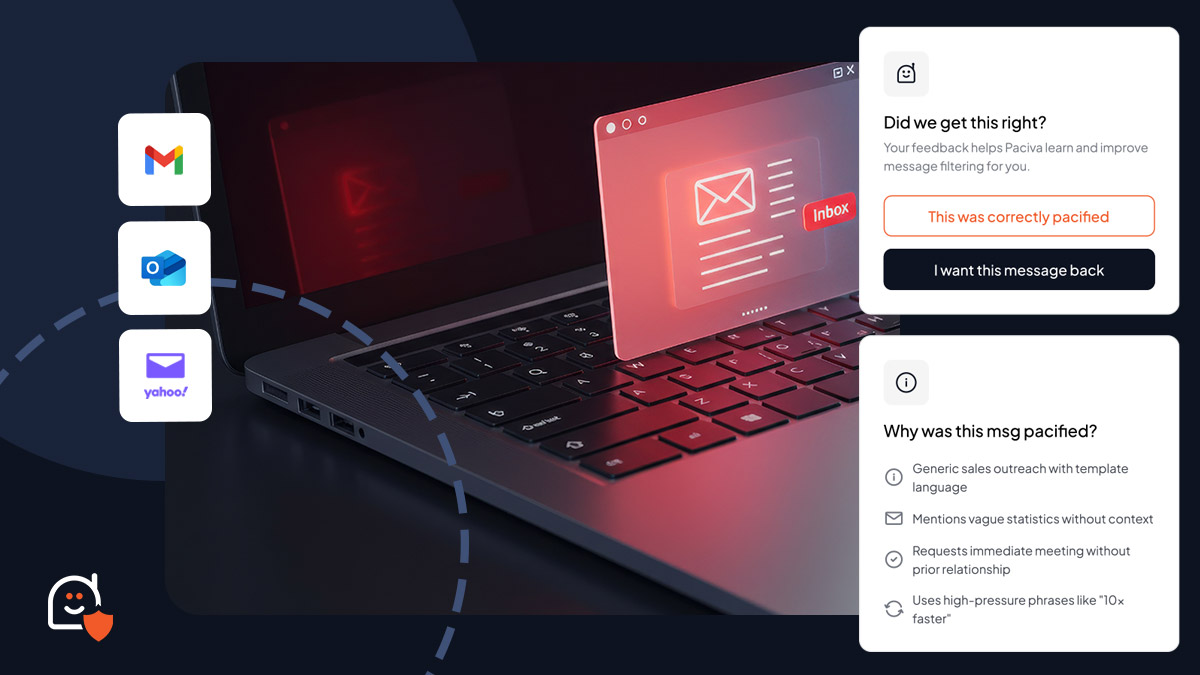
If you’re on the receiving side, the goal is not to become cynical. The goal is to reduce decision-making time without making inbox management a second job. The most effective first step is to put a system like Paciva in front of the problem so automated outreach and low-value messages get identified as they arrive and routed out of your primary view. That gives you breathing room while still keeping you in control through review and correction. You can absolutely do this manually with rules, labels, and discipline, but the truth is it becomes cumbersome fast. Manual triage works until you hit the volume that triggered this entire arms race in the first place. With Paciva handling the first pass, you can define what counts as signal, keep high-intent conversations visible, and stop renegotiating your attention with every new message.
If you are on the sending side, the solution is to stop treating volume as the primary lever, because the market is already saturated with volume. In a noisy world, relevance beats reach, and trust beats clever tactics. Fewer, more tightly aligned targets will outperform mass sequences over time, especially as buyers develop stronger mental filters and better tooling. Teams that rely on SDR automation and generic sequences will see diminishing returns, while teams that do real account selection and write with clear intent will stand out precisely because so few do it.
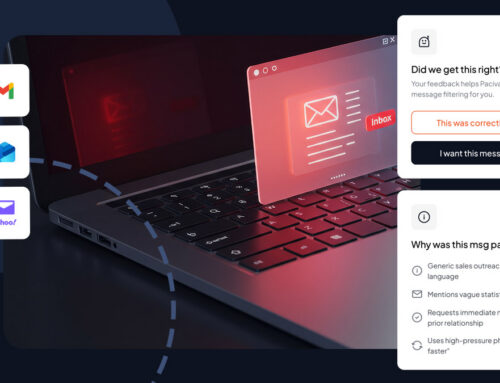

 Sales automation helped reps move faster, then it flooded inboxes and crushed trust. Here are eight ways it now hurts pipeline, deliverability, and brand, plus fixes.
 Sales automation helped reps move faster, then it flooded inboxes and crushed trust. Here are eight ways it now hurts pipeline, deliverability, and brand, plus fixes.
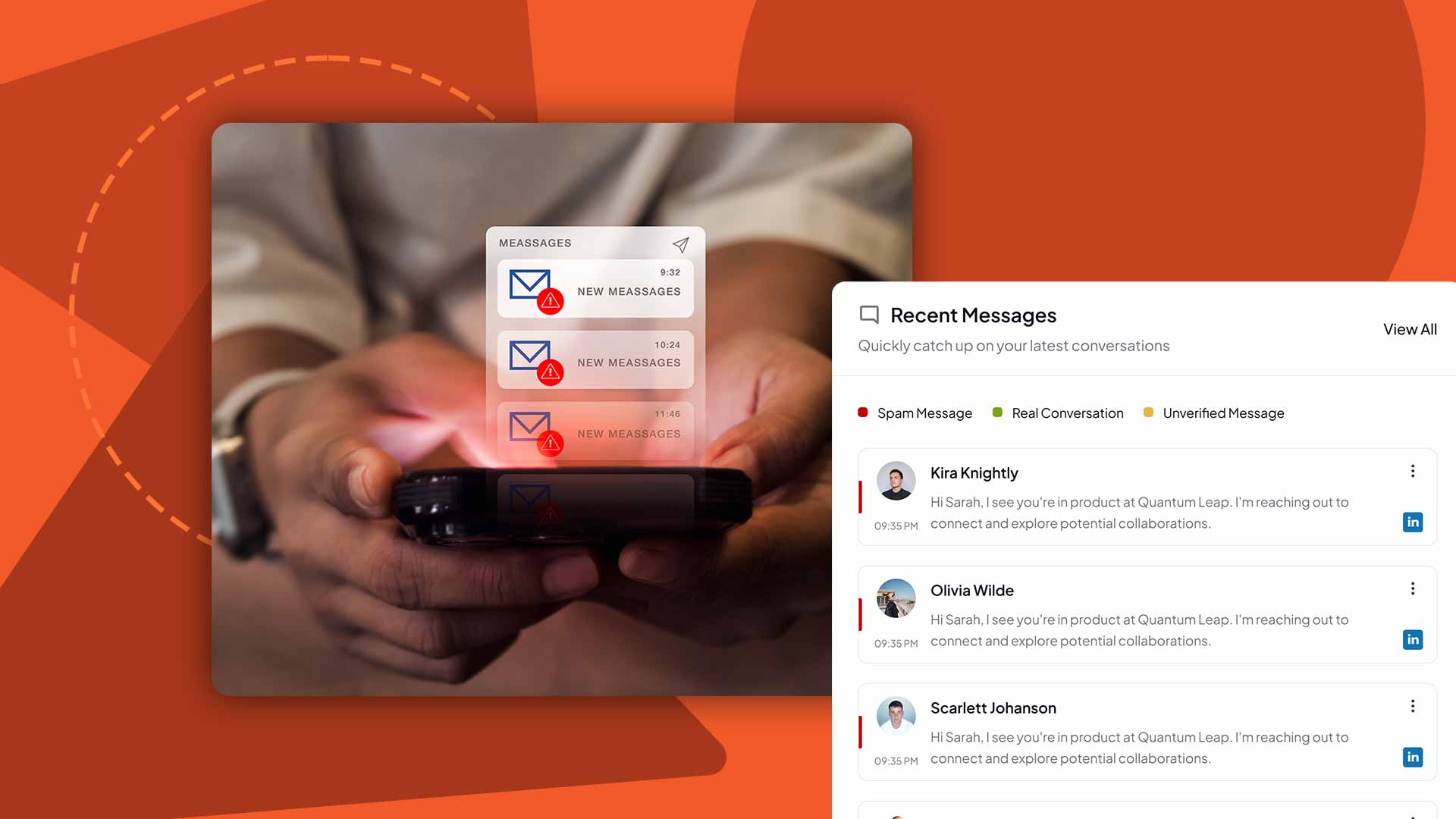 Cold outreach automation keeps escalating as tools get cheaper and smarter. Learn why inbox noise grows, spot it fast, and protect real signal for the long run.